
Recycling Facts vs. Myths: What You Really Need to Know
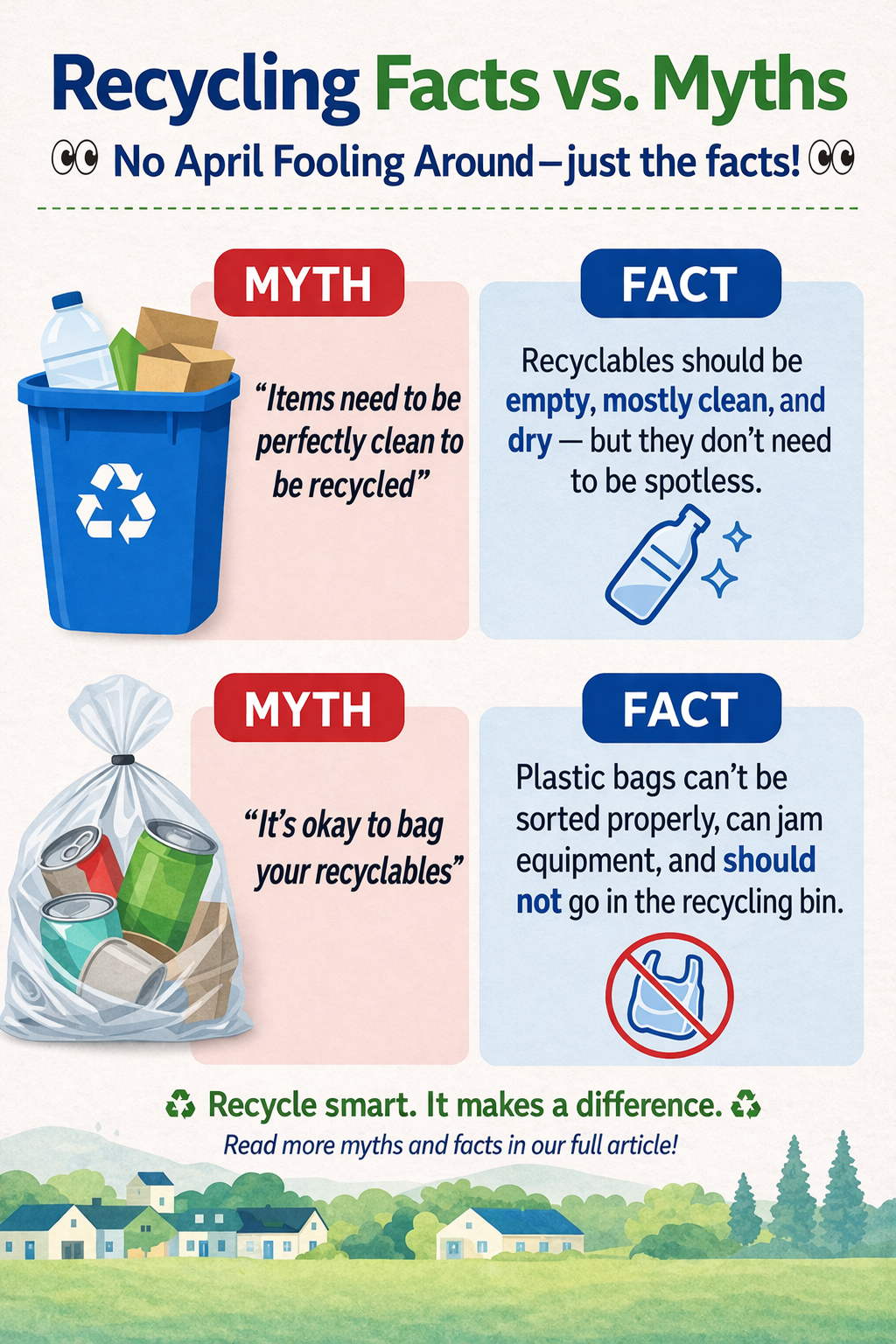
Recycling can feel confusing sometimes, especially with so much mixed information out there (and let’s be honest...some of it sounds like an April Fool’s joke). If you’ve ever stood over the bin unsure of what belongs, you’re not alone. Let’s clear up a few common myths so you can recycle with more confidence.
Myth: Items need to be perfectly clean to be recycled
Fact: They do not need to be spotless, but they should be empty, mostly clean, and dry. A quick rinse goes a long way.
Myth: It’s okay to bag your recyclables
Fact: Recyclables should go in the bin loose. Plastic bags cannot be sorted properly, can jam equipment, and often cause problems at the recycling facility.
Myth: If it has a recycling symbol, it belongs in the bin
Fact: Not always. The “chasing arrows” symbol is sometimes just used to label the resin a product is made from, especially plastics. When in doubt, check our handy Recycling Guide here : https://www.iwma.com/recycling-guide
Myth: “Compostable” plastics can go in any bin
Fact: In SLO County, compostable plastics should go in the trash. Our local facilities process organic material quickly, and these products can take longer to break down, clog machinery, and contaminate the finished compost.
Myth: It doesn’t matter what bin I place my waste in because it all gets sorted out anyway
Fact: Bin placement matters. Recycling facilities are designed to sort accepted recyclables, but they cannot fix contamination from the wrong items ending up in the wrong bin. Putting waste in the right bin helps the system work the way it is supposed to.
Myth: One wrong item does not matter
Fact: It matters more than people think. Contamination adds up, and the wrong items in the bin can affect the recycling process and prevent good materials from being recovered.
Recycling does not have to be complicated. A few simple habits and a better understanding of what belongs can make a big difference.